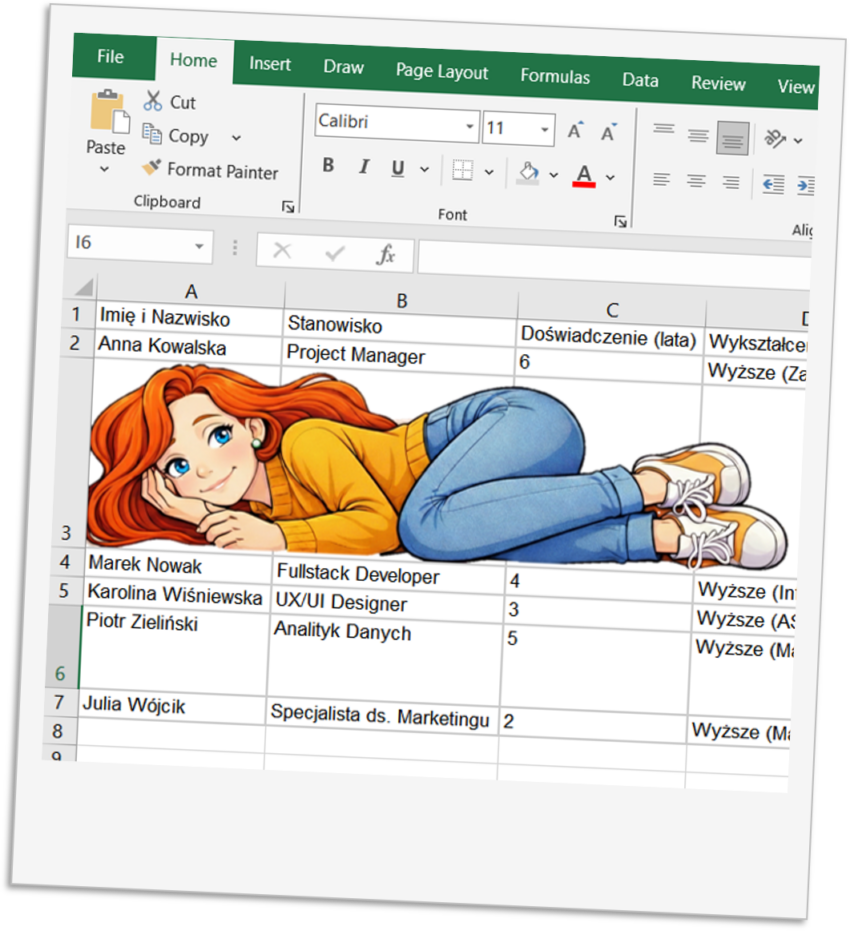
Did you know I gathered momentum and bounced off the ATS like it was a wall?
No? Well, now you do.
And did you know I did it twice?
No? Then here I am.
That nerd who soaks up knowledge like a sponge… and still couldn’t write a proper CV.
And you know what? That’s okay.
You have to learn everything at some point.
Sometimes at the cost of sending two CVs into the void instead of to roles that actually mattered.

How did I know something was off? I met the requirements. I had portfolio projects that matched exactly what the employer was looking for. I had the courses needed for the role. Even the experience I had to create for myself, because I was changing industries and no one was waiting with a ready-made position, felt thoughtful and genuinely valuable.
And then… silence. No response. None.
I started to wonder if something was wrong with me. With my skills. If maybe I was overestimating myself. And then it hit me — something far less dramatic and far more technical.
My CV was a collage of aesthetic text boxes. It wasn’t a simple, linear document written from top to bottom like a classic Word file. Headings sat next to the content instead of above it. The sections made visual sense to a human, but not logical sense to a system. The ATS didn’t know something was “Education” because the heading was placed beside the description, not over it. Stupid?
For a human, maybe.
For technology? Not at all.
In many companies, before a human ever sees your CV, it goes through an ATS. It sounds intimidating, but in practice it’s simply a tool for sorting documents. It doesn’t assess potential. It doesn’t see your career change story or the fact that you study in the evenings. It checks whether your CV contains the keywords the company is looking for. And only then does it decide whether to pass you forward.
And suddenly you realize that it matters whether you save your file as a simple text document or build it out of graphic text boxes. It matters whether a section is called “Work Experience” or creatively renamed “My Career Journey.” Even the date format matters — and whether it’s clear what that date actually refers to.

You know how I started looking at it? It may sound controversial, but I began to see my applications as if I were about to become just another record in an Excel table. Not a person with a story. A record. And a record has to be clean. Structured. Preferably with no nulls.
I also realized that matching the job posting matters — and that doesn’t mean inventing new stories, just adjusting the wording. If a company is looking for “SQL Server,” it’s not because they want to test whether you know synonyms. They genuinely mean SQL Server. That turned out to be very important.
After I started thinking this way, I felt relief. Suddenly, the silence no longer meant I wasn’t good enough. It meant my “record” hadn’t been read correctly. And a record can always be corrected.
I started treating my CV like an analytical project. If I can analyze data, I can analyze my own document. So I went drastic. I stripped out everything except the text. All the visual layout, the columns, the boxes… gone.
Before applying for the next role, I opened my CV and the job posting side by side in two windows. I tried to read like an algorithm. No emotions. No assumptions. Just text. Does my CV say exactly “SQL Server”? Does it say “Google Analytics 4,” not just “GA4”? I started replacing general phrases with the exact terms used in the posting.
I also started linking tools to the outcomes they produced. Apparently, modern recruitment systems are increasingly analyzing not just the presence of specific keywords, but the context in which they appear. I’m not an ATS specialist, and I don’t pretend to know how their algorithms work. But if that’s even partly true, then in a situation where other candidates show context and I don’t, I’m automatically placing myself one step behind them.
I reorganized the entire structure of my CV. Headings moved above their sections. I kept the layout clean and structured, making sure the ATS could read it properly. I placed clear, understandable dates close to the headings they referred to. And I used standard section names like Work Experience, Skills, and Education.
Now, with every CV I sent out, I made sure the job title from the posting found its way into my document. If not in the headline, then somewhere in the description. At the same time, I was careful not to create a fictional version of myself.
Did I feel a difference after those changes? Definitely. I won’t say I was suddenly flooded with interview invitations. But I started receiving system responses. You might be smiling right now, thinking, “So that still didn’t get you anywhere.” I see it differently. My “record” made it into the table. I stopped being invisible.
If we work with data, systems, and algorithms, why do we assume recruitment works purely on emotion? It doesn’t.
If you’re also trying to figure out how to communicate with an ATS, maybe I can help a little. I created my own simple CV templates. The kind that don’t fight the system but let themselves be read by it. If you’d like, you can use them. Maybe it will save you one collision with the wall… and one CV sent into the void.
Based on real life


If I had to sum up the CV changes in a few key points:
• A simple, linear layout. No graphic text boxes, no overcomplicated formatting.
• Headings placed above sections, not beside them. Use standard section names like Work Experience, Technical Skills, and Education.
• Use the exact keywords from the job posting, written exactly as they appear. No synonyms. No abbreviations if the company doesn’t use them.
• Link tool names to the context in which you used them, rather than listing technologies without outcomes.
• Clear dates, unambiguously tied to each role.
• Weave the job title from the posting into your CV, if it genuinely aligns with your skills and experience.
• A logical order: from your most recent experience to the oldest.
• One CV = one role.
Each application slightly tailored to the specific posting, rather than sending the same universal document everywhere.
• Keep the file format as simple as possible.
A PDF generated from a standard text editor, or a .docx file without unusual fonts.
• No icons or skill-level charts.
The system doesn’t understand stars or progress bars.
• And most importantly: don’t change who you are. Change how you present it.
 A cookie with your coffee?
Olga, lepiej to sformułowałaś niż jeden rekruter, jestem pod wrażeniem! Czyli lepiej word niż canva? Myślę że warstwa graficzna będzie dużo mniej atrakcyjna wizualnie.
To nie kwestia narzędzia, tylko struktury. Canva daje świetny efekt wizualny, ale jeśli CV jest zbudowane z pól i układu graficznego, ATS może go nie odczytać poprawnie. Dlatego postawiłam na prosty, liniowy zapis tekstu. Czasami lepiej, żeby CV wyglądało skromniej graficznie, ale dotarło do odbiorcy. 😉
Hej, dzięki za podzielenie się. Ja od jakiegoś czasu robię proste cv w Wordzie. Zero upiększeń. Biorę pd Ciebie dodawanie kontekstu do narzedzi- fajne. Pozdrawiam!
Super podejście. 😊 Dokładnie o to chodzi z tą prostotą. Fajnie, że dorzucisz jeszcze kontekst do narzędzi, to robi dużą różnicę. Dziękuję za komentarz! 💚
Hej Olga. Super materiał! I fajna analityczna diagnostyka problemu, z oryginalnymi, ale merytorycznie pasującymi metaforami.
Niby człowiek to podejrzewał, nawet częściowo wiedział, ale dopiero Twoje podejście i porady, do mnie przemawia. Być może dlatego, że lubię łączyć kreatywność z analizą ;). Dziękuję, że chciało Ci się tym, co wypracowałaś, podzielić.
Dzięki Michał! 💪🏻 Bardzo się cieszę, że to tak do Ciebie trafiło.
Ja sama miałam długo takie poczucie, że coś już wiem, ale to było rozproszone i mało użyteczne w praktyce. Dopiero jak zaczęłam to układać bardziej „analitycznie” (chyba już wszystko wsadzam w excela 😅), ale jednocześnie po ludzku, to zaczęło działać.
Oj, mój szósty zmysł podpowiada mi: czuję tu sporych rozmiarów talent 😉.
Mistrz Yoda by rzekł: dalej tą ścieżką podążaj, bo to, co było do tej pory przed Tobą ukryte, odnalazłaś 😂🤞