Project: Data storytelling for Working Dogs Foundation – animated video #BI_NGO
Tools: PowerPoint, GPT-4o (grafiki), Gen-4 Turbo (animacje), Eleven v3 (synteza mowy), edytor wideo
Description: Animated video with narration created as part of a data analytics volunteering project #BI_NGO (Data Language × Working Dogs Foundation). The project addressed a specific need of the foundation: “We have descriptions of what we do, but we don't have data that truly touches people.”
Objective: Preparation of promotional and fundraising material for use during partner meetings, fundraising activities, and social media communication.
Data: Public data on shelters and adoptions in Poland (2005–2024) and operational and financial data from the foundation covering 2022–2025.
Volunteer work: #BI_NGO II edition – an initiative by Język Danych supporting social organizations in data visualization.
🔒 Operational and financial data of the foundation are confidential – the project is available exclusively in video form.
Introduction
The #BI_NGO volunteering program (Business Intelligence for NGOs) is an initiative by Język Danych that connects analysts with social organizations in need of support in data visualization. In the second edition, the partner foundation was Working Dogs Foundation – an organization running a behavioral support program for adoptive dog guardians (#Adopsiaki), educational workshops in schools and kindergartens, and the Dog Friendly Company program for businesses.
The task was: create a visualization that would support the foundation in fundraising, business partner meetings, and external communication. The format was open-ended.
Instead of a dashboard or static slides, I chose to create an animated video with narration. The foundation did not have materials that truly touch people. I decided to test whether this could be achieved by combining data storytelling with generative AI models, without involving a graphic designer or animation studio.
Distinction in #BI_NGO volunteering – 2nd edition
The project was recognized for creating an animated and data storytelling-based material using AI.
Data
The project used two types of data provided by the #BI_NGO organizers.
Public data from open sources included the number of dogs in shelters in Poland and the number of adoptions between 2005 and 2024.
Operational data from the Working Dogs Foundation for 2022–2025 included statistics from the #Adopsiaki program (applications, supported families, trainer locations), educational data (number of children and institutions covered by workshops), data from the Dog Friendly Company program (number of companies and workshop locations), general foundation metrics (volunteers, recurring donors, social media reach), financial data (revenue by source, costs, financial result), and beneficiary statements from the #Adopsiaki program.
Operational and financial data of the foundation are confidential and have not been published.
Process
1) Format selection and narrative design
- Among the available formats (slides, infographic, dashboard, video), I chose an animated video because the foundation needed a deliverable that would function not only as a report, but also as a persuasive tool for partner meetings and social media communication. An additional assumption was selecting a format with a higher chance of engaging younger audiences.
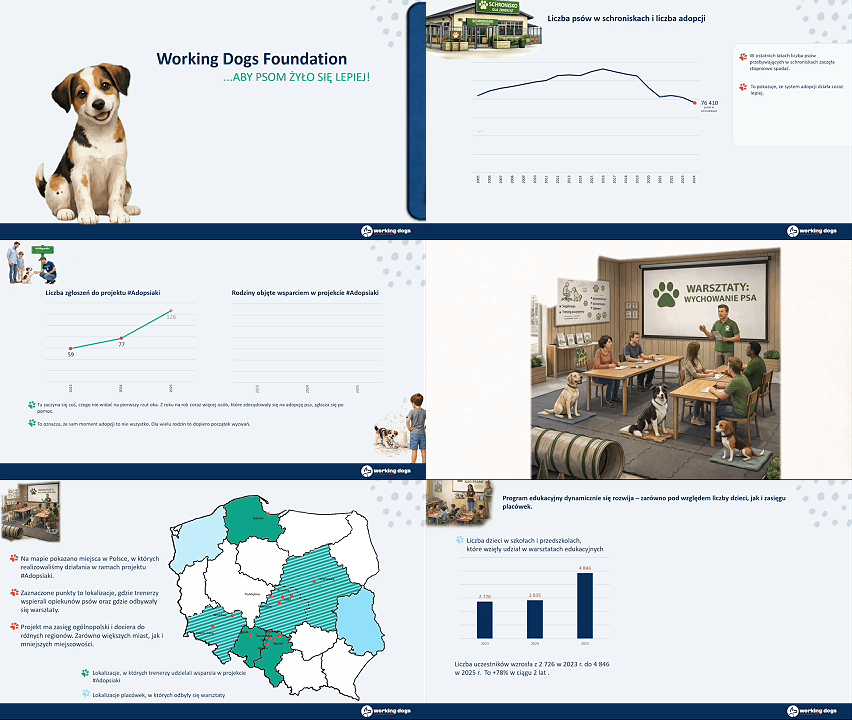
- The narrator was a fictional dog named Karmel, telling his story from a shelter to a new home. This perspective allowed the data to be naturally embedded into the narrative flow: adoption trends as context, the #Adopsiaki program as the solution, and financial data as an argument for support.
- The narrative structure was intentional. Data on shelters appears at the beginning to illustrate the scale of the problem. Program data is placed in the middle as a presentation of the foundation’s activities. Financial data is placed at the end as a fundraising argument.
2) Production
- Slides with charts and a map were created in Microsoft PowerPoint, maintaining the foundation’s visual identity (colors, fonts, logo). Graphics illustrating individual scenes were generated using the GPT-4o model. Several short animations of the dog character, serving as a visual narrator connecting the scenes, were generated using the Gen-4 Turbo model.
- The voiceover narration (Karmel’s voice) was created using the ElevenLabs Eleven v3 model. The script was written with synchronization to the visual material in mind. Each scene had a defined rhythm that determined the length of the audio segments.
- The final video was assembled in a video editor. The process included synchronizing the narration with the visual material, adjusting scene pacing to match the script, and layering elements such as dog animations over slides and background audio.
Results
- The final video material (approximately 3.5 minutes) combines the foundation’s data with an emotional narrative, maintained in the visual identity of the Working Dogs Foundation, and prepared for external communication and fundraising purposes.
Reflections
- The project showed that generative AI models can be a real production tool when resources are limited, but they require the same level of discipline as any other stage of data work. Visual consistency between scenes is not automatic. It requires prompt iteration and deliberate decisions regarding style at every stage.
- The biggest challenge turned out not to be the choice of tools, but the editing process. Synchronizing the narration with the pace of the presented data so that the viewer has enough time to absorb the chart before the narrative moves to the next thread is a problem that traditional data visualization does not raise, but in a video format it is critical.
 A cookie with your coffee?